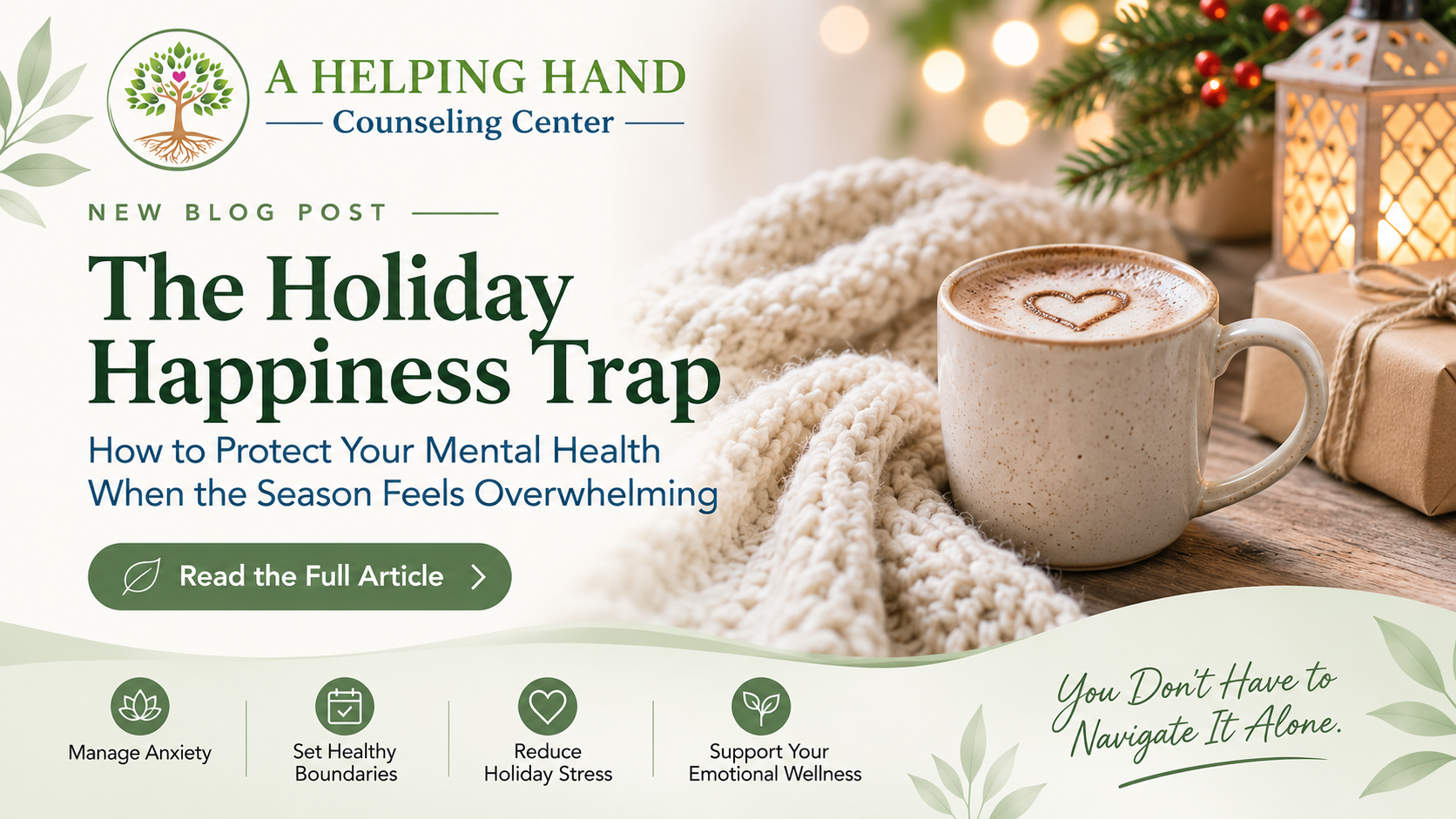
The Holiday Happiness Trap: 9 Ways to Protect Your Mental Health When the Season Feels Overwhelming
Holiday stress, depression, loneliness, financial pressure, and the expectation to feel happy.
The decorations are going up. Holiday music is playing everywhere. Social media is filling with smiling families, beautiful dinners, expensive gifts, and seemingly perfect celebrations.
But what if you’re not feeling particularly joyful?
What if you’re worried about money, dreading family gatherings, missing someone you love, or feeling more alone than usual?
What if you’re already exhausted, and the holidays feel like another responsibility rather than something to look forward to?
Here’s something worth remembering: You can appreciate the holidays and still struggle with them.
For many people, the holiday season brings a complicated mix of happiness, sadness, anxiety, financial pressure, loneliness, and emotional exhaustion.
At A Helping Hand Counseling Center in St. Cloud, Florida, we believe emotional well-being shouldn’t depend on having a picture-perfect holiday.
And sometimes, the healthiest holiday is simply one that allows you to be yourself.
A Quick Guide to Feeling Better During the Holidays
-
Holiday anxiety: Reduce unnecessary commitments and set realistic expectations.
-
Holiday depression: Recognize persistent symptoms and seek support when needed.
-
Loneliness: Focus on meaningful connection rather than the number of people around you.
-
Financial stress: Create a spending limit that protects your peace of mind.
-
Food and body image: Enjoy holiday traditions without shame or punishment.
-
Family tension: Establish boundaries before stressful situations arise.
-
Grief: Make space for memories and emotions without forcing yourself to celebrate.
-
Emotional exhaustion: Schedule rest just as intentionally as holiday activities.
-
Social comparison: Remember that someone else’s holiday highlight reel isn’t the whole story.
Why Do the Holidays Make Anxiety and Depression Feel Worse?
The holidays can intensify emotions because they bring together multiple stressors in a relatively short period.
You might be managing increased expenses, changes in your normal routine, family expectations, travel, difficult memories, or social obligations.
For some people, the season also highlights what feels missing: a loved one, a relationship, financial stability, or the kind of family experience they wish they had.
Holiday-related sadness isn’t automatically clinical depression. However, persistent low mood, loss of interest, hopelessness, changes in sleep or appetite, and difficulty functioning may indicate a need for professional evaluation.
If you’re unsure whether what you’re experiencing is temporary stress or something more significant, read our related article:
Burnout, Anxiety, or Depression? When to Seek Help in St. Cloud, FL
1. Stop Trying to Create the Perfect Holiday
There’s an invisible checklist many of us carry into November and December.
The perfect decorations. The perfect meal. The perfect gifts. The perfect family photos.
And somehow, we’re supposed to accomplish all of it while maintaining our normal work, parenting, financial, and personal responsibilities.
That’s a lot of pressure.
Try this instead:
Ask yourself three questions before committing to another holiday activity:
-
Does this genuinely matter to me or my family?
-
Am I doing this because I want to, or because I feel obligated?
-
Will this add meaning to my holiday or simply add stress?
Give yourself permission to simplify.
A smaller gathering, fewer gifts, or a quiet evening at home can be just as meaningful as an elaborate celebration.
Take-home reminder: A meaningful holiday doesn’t have to be an impressive holiday.
2. Recognize When Holiday Sadness Becomes Something More
Feeling sad occasionally during the holidays is common, particularly when you’re experiencing grief, relationship difficulties, or financial stress.
But ongoing emotional distress deserves attention.
Signs to watch for include:
-
Feeling persistently sad, empty, or hopeless
-
Losing interest in activities you usually enjoy
-
Withdrawing from friends and family
-
Experiencing significant changes in sleep or appetite
-
Feeling unusually irritable or overwhelmed
-
Having difficulty concentrating or completing everyday tasks
If these symptoms persist for two weeks or longer, or significantly interfere with daily life, consider speaking with a mental health professional. You don’t need to wait two weeks if symptoms are severe.
For practical strategies on difficult days, visit:
Tips for a Bad Depression Day: Small Steps That Can Help You Feel More Grounded
3. Feeling Alone During the Holidays? Connection Doesn’t Have to Be Complicated
One of the most painful parts of the holiday season can be feeling disconnected while everyone else appears surrounded by friends and family.
Maybe you’re spending the holidays away from loved ones. Perhaps you’re recently divorced, grieving, or navigating a major life transition.
Or maybe you’re attending every gathering and still feeling emotionally alone.
Being surrounded by people and feeling connected are not always the same thing.
Try creating connection in smaller, more manageable ways.
-
Send a message to someone you’ve been meaning to reconnect with.
-
Invite a friend for coffee or a walk.
-
Participate in a community activity or volunteer opportunity.
-
Schedule a video call with someone who lives far away.
-
Create a new personal tradition that feels meaningful to you.
You don’t need a crowded table to experience belonging.
Take-home reminder: One genuine conversation can be more meaningful than an entire evening of forced socializing.
4. Don’t Let Holiday Spending Follow You Into January
Holiday financial stress can quietly affect emotional well-being.
Gift exchanges, travel, decorations, parties, special meals, and last-minute purchases add up quickly.
For people already managing financial uncertainty, the pressure to provide an impressive holiday can create additional anxiety.
And social media doesn’t make it easier.
Before shopping, create a realistic holiday spending plan.
Your Holiday Spending Reality Check
0 of 6 steps completed
Remember, financial stability is a form of self-care.
Take-home reminder: Your love for someone isn’t measured by the amount you spend on them.
5. Holiday Eating, Weight Gain, and Body Image: Give Yourself Some Grace
Holiday celebrations often revolve around food.
Unfortunately, they can also bring guilt, body comparisons, unwanted comments about weight, and pressure to start a restrictive diet in January.
For some people, this creates a cycle of overeating, guilt, restriction, and anxiety.
Rather than treating holiday meals as something you need to earn or compensate for, consider a more balanced approach.
-
Eat regular meals instead of skipping food to prepare for a holiday dinner.
-
Enjoy favorite holiday foods without labeling them as good or bad.
-
Move your body in ways that feel enjoyable rather than punitive.
-
Avoid commenting on other people’s weight or food choices.
-
Remember that temporary changes in eating habits do not define your health.
If body image concerns are affecting your mental well-being, professional counseling can help you explore the emotions and thought patterns behind them.
Related reading:
All Bodies Are Summer Bodies: How Can I Feel Better About My Body?
Take-home reminder: You are allowed to enjoy a holiday meal without turning it into a judgment about your body.
6. Set Boundaries With Family Without Feeling Guilty
Family gatherings can bring love and connection, but they can also reopen old conflicts.
Questions about relationships, finances, parenting, careers, or personal decisions can make an otherwise enjoyable gathering feel uncomfortable.
You can care about your family and still establish boundaries.
Try using simple, respectful responses:
“I’d rather not discuss that today.”
“We’re keeping things simple this year.”
“I appreciate your concern, but I’m comfortable with my decision.”
“I can stay for a couple of hours, but then I need to head home.”
Boundaries aren’t about controlling other people. They’re about deciding what you are comfortable participating in.
Take-home reminder: You can be kind without saying yes to everything.
7. Make Room for Grief, Even When Everyone Else Is Celebrating
The holidays can make the absence of someone you love feel especially noticeable.
An empty chair at dinner. A familiar recipe. A song you used to listen to together.
Sometimes the smallest traditions bring the biggest emotions.
If you’re grieving, you don’t have to pretend that everything is fine.
Consider honoring your loved one in a way that feels comfortable:
-
Prepare a favorite meal or recipe.
-
Light a candle in their memory.
-
Share a story about them.
-
Continue a meaningful tradition.
-
Create a new tradition that reflects your life today.
It’s also okay to skip certain activities or change traditions that feel too painful.
There is no single correct way to experience grief.
8. Protect Your Energy Instead of Filling Every Available Hour
Holiday schedules can quickly become overwhelming.
Between shopping, cooking, work deadlines, school activities, travel, and social events, there may be little time left to recharge.
If you find yourself feeling constantly tense or mentally exhausted, your body may be signaling that you need more rest.
Try creating space between commitments rather than scheduling every hour.
A few simple strategies include taking short breaks, maintaining consistent sleep routines when possible, and setting aside quiet time without screens.
You may also find these resources helpful:
Why Am I So Anxious Lately? Understanding Anxiety and What Helps
10 Practical Ways to Improve Your Mental Health Today
Take-home reminder: Rest is not something you have to earn by exhausting yourself first.
9. Stop Comparing Your Real Life to Someone Else’s Holiday Highlights
Social media can make it seem like everyone else is having the perfect holiday season.
Beautiful homes. Expensive vacations. Matching pajamas. Elaborate family dinners.
What you don’t see are the disagreements, financial concerns, exhaustion, or personal struggles that may exist behind those photographs.
When you notice yourself comparing, try asking:
“Would I still want this if nobody else could see it?”
If the answer is no, it might be worth reconsidering whether it’s something you genuinely value.
Consider limiting time on social media when it increases feelings of inadequacy, anxiety, or sadness.
Your holiday doesn’t need to look like anyone else’s to be meaningful.
Your 7-Day Holiday Mental Health Reset
You don’t need to overhaul your entire life to make the season feel more manageable.
Start with one small action each day.
Your weekly progress
0/7 completed
Copy my checklist
Small actions won’t eliminate every challenge, but they can help you create a holiday season that feels more manageable and intentional.
When Should You Consider Counseling for Holiday Anxiety or Depression?
Sometimes, even after making changes, the emotional weight of the season remains difficult to manage.
If anxiety, depression, grief, or relationship stress is affecting your daily life, counseling may provide a supportive space to understand what you’re experiencing and develop personalized coping strategies.
At A Helping Hand Counseling Center, we provide mental health services for individuals and families in St. Cloud, Kissimmee, Narcoossee, Harmony, Lake Nona, and surrounding Central Florida communities.
Our services include individual counseling, family counseling, trauma-focused therapies, and additional mental health support.
You don’t have to wait until the holidays are over to ask for help.
This Holiday Season, Give Yourself Permission to Feel What You Feel
You don’t need to be happy every moment.
You don’t need to spend more than you can afford.
You don’t need to attend every gathering, eat perfectly, or create memories that look impressive online.
You deserve a holiday season that makes room for your real life, your emotional needs, and the people and experiences that genuinely matter.
The holidays don’t have to be perfect to be meaningful. And you don’t have to navigate difficult emotions alone.
Support Is Available in St. Cloud, FL
A Helping Hand Counseling Center offers compassionate mental health counseling for individuals, couples, and families.
Phone: (407) 450-5985
Address: 303 Commerce Center Drive, St. Cloud, FL 34769
Website: https://www.ahhcounseling.com
Request an Appointment
If you or someone you know is experiencing suicidal thoughts or an immediate mental health crisis, call or text 988 for confidential crisis support in the United States. For immediate danger, call 911.
Frequently Asked Questions About Holiday Mental Health
1. Why do I feel depressed during the holidays?
Holiday depression symptoms can be influenced by grief, loneliness, financial pressure, difficult family relationships, disrupted routines, or unrealistic expectations. Persistent symptoms may indicate depression requiring professional support.
2. Is holiday anxiety normal?
Feeling anxious about holiday responsibilities or social situations is common. However, anxiety that becomes persistent, overwhelming, or interferes with everyday functioning deserves attention.
3. How can I cope with spending the holidays alone?
Consider creating meaningful personal traditions, connecting with friends virtually, volunteering, participating in community activities, or reaching out to supportive people. Being alone doesn’t have to mean being disconnected.
4. Can financial stress cause holiday anxiety?
Yes. Financial worries can contribute to anxiety, sleep difficulties, relationship tension, and emotional exhaustion. Establishing a realistic spending plan and discussing expectations with loved ones may help.
5. How can I avoid feeling guilty about holiday eating or weight gain?
Focus on balanced routines, enjoyable movement, and a compassionate relationship with food. Avoid restrictive compensation behaviors and negative body comparisons. If food or body image concerns are persistent or distressing, consider professional support.
6. How do I handle difficult family members during holiday gatherings?
Set boundaries in advance, decide how long you want to stay, prepare respectful responses to uncomfortable questions, and give yourself permission to leave situations that become emotionally harmful.
7. When should I seek therapy for holiday depression or anxiety?
Consider therapy when symptoms persist, become difficult to manage, or interfere with relationships, work, sleep, or daily functioning. You don’t need a formal diagnosis to benefit from counseling.
8. Where can I find counseling for holiday anxiety or depression in St. Cloud, Florida?
A Helping Hand Counseling Center provides counseling and mental health services in St. Cloud for individuals and families throughout Osceola County and nearby communities. Visit our contact page or call (407) 450-5985 to learn more about services and appointments.
A Helping Hand Counseling Center
- 303 Commerce Center Drive St. Cloud, FL 34769
- teamcare@ahhcounseling.com
- (407) 450-5985
- www.ahhcounseling.com
Subscribe to Our Newsletter
Posts Category
Most Popular Posts

Why Do I Feel Guilty When I’m Not Doing Anything? 9 Signs You’ve Forgotten How to Rest
You finally get a moment to yourself. The laundry can wait. The emails are answered. The kids are occupied. Nobody needs anything from you. You

How to Say No Without Guilt: 7 Boundary Scripts for People Who Always Say Yes
You agree to help before checking your calendar. You answer a message during dinner because leaving it unread feels rude. You say “whatever works for
Why Can’t I Relax? 9 Everyday Habits That Keep You Feeling “Always On”
You finally sit down after a long day. The house is quieter. Nobody needs an immediate answer. You have a little time to yourself. But
Subscribe to Our Newsletter