
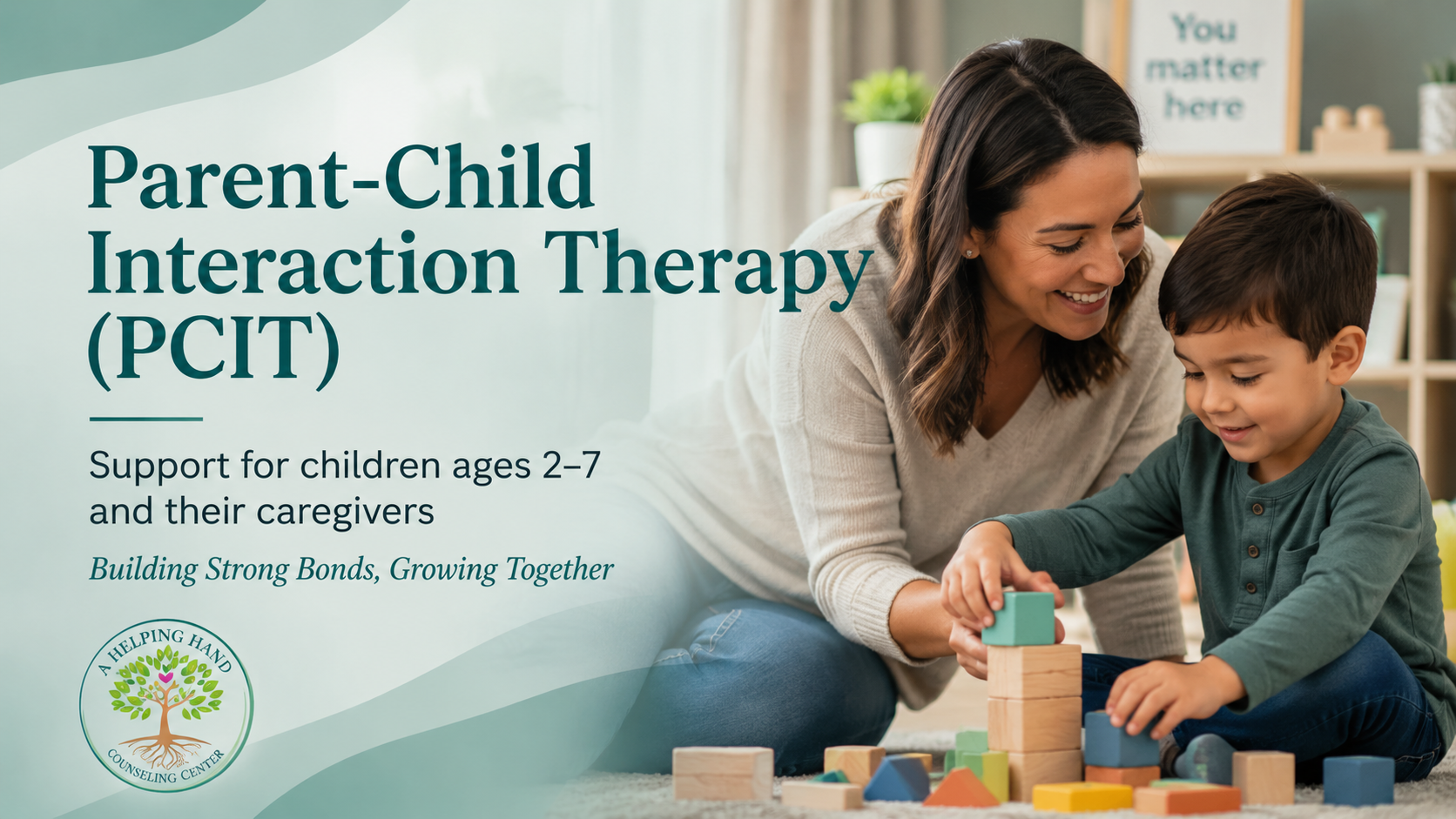
Parent-Child Interaction Therapy, PCIT, in St. Cloud, FL: Support for Big Feelings and Behavior Challenges
Key Takeaways
Parent-Child Interaction Therapy, or PCIT, is an evidence-based therapy for young children ages 2 to 7.
PCIT can help children who struggle with tantrums, defiance, aggression, emotional outbursts, and difficulty following directions.
Parents and caregivers are actively involved in the therapy process.
PCIT focuses on strengthening the parent-child relationship while helping caregivers respond to behavior challenges with confidence and consistency.
A Helping Hand Counseling Center offers compassionate child and family counseling support in St. Cloud, FL and surrounding communities.
Parenting a young child can be joyful, meaningful, and overwhelming all at the same time. When your child is having frequent tantrums, struggling to listen, acting out aggressively, or experiencing big emotions that feel hard to manage, daily life can become stressful for the whole family.
Many parents wonder what they should do differently. Others feel stuck between wanting to be patient and needing their child’s behavior to change. Parent-Child Interaction Therapy, also known as PCIT, can help.
At A Helping Hand Counseling Center in St. Cloud, FL, PCIT gives parents and caregivers support, structure, and practical tools while helping children build confidence, emotional security, and stronger communication skills. A Helping Hand Counseling Center provides compassionate, evidence-based therapy for individuals, couples, and families in St. Cloud and surrounding communities.
What Is Parent-Child Interaction Therapy?
Parent-Child Interaction Therapy, or PCIT, is an evidence-based treatment for young children, typically ages 2 to 7, who are struggling with behavioral concerns such as tantrums, defiance, aggression, and difficulty following directions. PCIT is designed to support both the child and the caregiver by improving the parent-child relationship and teaching practical behavior-management skills.
Unlike some forms of child therapy where the child may meet mostly one-on-one with a therapist, PCIT actively includes the parent or caregiver. This is one of the things that makes PCIT unique. Parents are not just given general advice. They are guided, supported, and coached as they practice skills with their child.
The goal is not to create perfect behavior overnight. The goal is to help families build stronger relationships, improve communication, reduce conflict, and create more confidence at home.
Who Can Benefit From PCIT?
PCIT may be helpful for families with children ages 2 to 7 who are experiencing behavior challenges, emotional struggles, or difficulty with daily routines.
PCIT may help children who struggle with:
- Frequent tantrums or meltdowns
- Big emotions that feel hard to manage
- Trouble listening or following directions
- Defiance or power struggles
- Aggressive or disruptive behaviors
- Difficulty with transitions or routines
- Parent-child conflict
- Low confidence or insecurity
- Communication challenges
PCIT can also support parents and caregivers who feel overwhelmed, frustrated, unsure how to respond, or stuck in repeated behavior patterns at home.
Seeking support does not mean you have failed as a parent. It means you are taking a meaningful step toward connection, confidence, and healthier family routines.
How PCIT Works
PCIT is typically completed in two phases. Each phase has a different focus, but both are designed to help the child and caregiver grow together.
Phase One: Strengthening Connection
The first phase of PCIT focuses on strengthening the parent-child relationship. Parents and caregivers learn how to use warmth, attention, praise, encouragement, and play-based interaction to build connection with their child.
This phase can be especially helpful for families who feel like most interactions have become focused on correction, reminders, discipline, or conflict. By strengthening the relationship first, children often feel more secure, supported, and open to positive guidance.
Phase Two: Building Confidence and Consistency
The second phase of PCIT focuses on behavior management. Parents and caregivers learn how to give clear directions, set appropriate limits, and respond to challenging behaviors in calm and consistent ways.
This phase helps caregivers feel more prepared in everyday moments such as bedtime, mealtime, transitions, school routines, public outings, and other stressful situations.
PCIT is not about harsh discipline. It is about giving children clear expectations while helping parents respond with confidence, consistency, and emotional safety.
What Makes PCIT Different?
PCIT is different because parents and caregivers are active participants in the therapy process. Instead of only talking about what is happening at home, families practice new skills together during sessions.
Through play and connection, PCIT focuses on:
- Strengthening the parent-child relationship
- Managing emotions and behaviors
- Improving communication skills
- Building confidence and security
- Helping parents feel more calm and consistent
- Creating tools that can be used at home every day
Parents are not blamed or judged. They are supported, coached, and equipped with strategies that can make daily life feel more manageable.
Benefits of PCIT
PCIT can be helpful when families are navigating behavior concerns, emotional outbursts, or parent-child conflict. While each family’s experience is unique, PCIT is designed to help both children and caregivers build skills that support healthier interactions.
PCIT may support:
- Stronger Parent-Child Connection: Helps build warmth, trust, and positive interactions between children and caregivers.
- Improved Emotional Regulation: Supports children in learning how to manage big feelings like frustration, anger, anxiety, or sadness.
- Better Communication Skills: Encourages clearer communication between parents and children through connection, play, and guided practice.
- Behavioral Improvement: Can address challenges such as tantrums, defiance, aggression, and difficulty following directions.
- Increased Parent Confidence: Gives parents and caregivers practical tools to respond with calm, consistency, and confidence at home.
When caregivers feel more confident and children feel more connected, families often begin to experience more positive moments together.
What Parents Can Expect
PCIT sessions are focused on supporting both you and your child with practical tools, connection, and confidence.
A Safe and Welcoming Environment
PCIT takes place in a supportive, child-friendly space designed to help your child feel comfortable and secure. Sessions use play, connection, and guided interaction to help families practice new skills in a warm and encouraging environment.
Confidentiality and Trust
Your therapist will create a safe space for your family while maintaining appropriate confidentiality. Parents and caregivers are active participants in PCIT, so your therapist will work with you throughout the process to support progress, answer questions, and guide skill-building.
Individualized Approach
Every child and family is unique, so PCIT is tailored to your child’s needs, your parenting goals, and the challenges you are experiencing at home. Your therapist will help identify strategies that support your child’s emotional and behavioral growth in a way that feels practical and realistic.
Parent-Therapist Collaboration
PCIT is a collaborative process. Parents and caregivers work closely with the therapist to learn, practice, and strengthen skills that can be used outside of sessions. This partnership helps create consistency between therapy and daily life at home.
Duration and Frequency
PCIT is typically completed over a series of sessions, with frequency based on your child’s needs, family goals, and progress. Many families attend sessions weekly, and your therapist will help determine the best treatment plan during the initial consultation.
What Therapists Expect From Parents
PCIT works best when parents and caregivers are actively involved, open to practice, and committed to using the skills both during sessions and at home.
Active Participation
Your involvement is essential to your child’s progress in PCIT. Parents and caregivers are part of each session and will be asked to practice skills with their child while receiving guidance and support from the therapist.
Willingness to Practice
PCIT is a hands-on therapy, and progress often comes from practicing skills consistently. Your therapist may encourage you to use specific strategies at home between sessions so your child can experience the same support and structure in daily life.
Open Communication
Regular communication with the therapist is important. If you notice changes in your child’s behavior, emotions, routines, or interactions at home, sharing that information can help the therapist adjust the approach and better support your family’s goals.
Patience With the Process
Behavior change takes time, especially for young children who are still learning how to manage emotions, follow directions, and communicate their needs. Parents are encouraged to stay patient, consistent, and engaged throughout the process.
Commitment to Consistency
PCIT is most effective when skills are used both in sessions and at home. Attending scheduled sessions regularly and practicing the tools between appointments helps create steady progress and supports long-term change.
Our Approach to PCIT
At A Helping Hand Counseling Center, our therapists use evidence-based PCIT techniques that combine play-based interaction, live parent coaching, and behavior-management strategies. We focus on helping parents and caregivers strengthen connection, build confidence, and respond to their child’s emotions and behaviors in calm, consistent, and supportive ways.
Our approach is compassionate, practical, and family-centered. We understand that every child is different, and every family comes to therapy with its own strengths, stressors, and goals.
PCIT is not about blaming parents or labeling children. It is about helping families create new patterns that support connection, emotional growth, and healthier communication.
Why Choose AHHCC for PCIT in St. Cloud, FL?
At AHHCC, located in St. Cloud, FL, our trained therapists use evidence-based Parent-Child Interaction Therapy techniques to help young children and caregivers strengthen their relationship, manage behavioral challenges, and build healthier communication patterns.
We believe that parents and caregivers are an essential part of a child’s growth, and we are committed to providing a supportive, family-centered environment where both you and your child can feel encouraged and understood.
Families in St. Cloud, Kissimmee, Narcoossee, Osceola County, and surrounding Central Florida communities can reach out to A Helping Hand Counseling Center to learn more about available services, appointment options, and next steps.
When Should a Parent Consider PCIT?
Parents may consider PCIT when behavior challenges are becoming frequent, stressful, or difficult to manage. It may also be helpful when parents feel like they have tried several strategies but still feel stuck.
PCIT may be worth exploring if you often think:
“My child does not listen no matter what I do.”
“Tantrums are taking over our day.”
“I want to feel more connected to my child.”
“I need help responding calmly and consistently.”
“I want tools I can actually use at home.”
“My child has big feelings and I do not know how to help.”
Getting support early can help families build stronger skills before patterns become more stressful or harder to change.
PCIT and Everyday Family Life
One of the most helpful parts of PCIT is that the skills are meant to be used in real life. The goal is not just to have a successful therapy session. The goal is to help families feel more confident during everyday moments at home.
PCIT skills may support daily routines such as:
- Morning transitions
- Getting ready for school or daycare
- Mealtime
- Bedtime
- Cleaning up toys
- Following directions
- Managing frustration
- Responding to limits
- Handling public outings
For many families, small changes in how caregivers respond can create meaningful changes in how children feel, communicate, and behave.
Small Steps Today, Big Changes Tomorrow
Young children are still learning how to manage emotions, communicate needs, and respond to limits. Parents are learning too. PCIT gives families a supportive space to practice these skills together.
With the right tools and guidance, small steps can lead to meaningful changes in your child’s behavior, your confidence as a caregiver, and the relationship you share.
If your family is looking for Parent-Child Interaction Therapy in St. Cloud, FL, A Helping Hand Counseling Center is here to support you.
Contact A Helping Hand Counseling Center today to learn more about PCIT availability or schedule an appointment.
Frequently Asked Questions About PCIT
What does PCIT stand for?
PCIT stands for Parent-Child Interaction Therapy.
What age is PCIT for?
PCIT is typically designed for children ages 2 to 7 and their parents or caregivers. It is commonly used to support young children who are struggling with behavior concerns such as tantrums, defiance, aggression, and difficulty following directions.
What behaviors can PCIT help with?
PCIT may help with tantrums, emotional outbursts, defiance, aggression, difficulty following directions, trouble with routines, and parent-child conflict.
Are parents involved in PCIT?
Yes. Parents and caregivers are essential to PCIT. Caregivers participate in sessions, learn practical skills, and practice those skills with their child both during therapy and at home.
How is PCIT different from regular child therapy?
PCIT is different because it directly includes the parent or caregiver in the therapy process. Instead of only discussing behavior concerns, caregivers practice skills with their child and receive guidance from the therapist.
Is PCIT only for severe behavior problems?
No. PCIT can support families with a range of behavior and emotional concerns, from frequent tantrums and daily power struggles to more disruptive behaviors. It can also help parents who want to feel more confident, connected, and consistent.
How long does PCIT take?
The length of PCIT depends on the child’s needs, family goals, and progress. Many families attend sessions weekly, and your therapist can provide more specific recommendations after an initial consultation.
Can PCIT help with tantrums?
Yes. PCIT is commonly used to support children who experience frequent tantrums, defiance, aggression, and difficulty following directions. The therapy helps caregivers respond with more consistency while strengthening the parent-child relationship.
Does A Helping Hand Counseling Center offer PCIT near Kissimmee and St. Cloud?
Yes. A Helping Hand Counseling Center is located in St. Cloud, FL and serves clients from surrounding communities, including Kissimmee, Narcoossee, Osceola County, and Central Florida.
How do I get started with PCIT?
You can contact A Helping Hand Counseling Center to ask about PCIT availability, request an appointment, or speak with the front desk about next steps. The center’s contact page lists the phone number as 407-450-5985.
A Helping Hand Counseling Center
- 303 Commerce Center Drive St. Cloud, FL 34769
- teamcare@ahhcounseling.com
- (407) 450-5985
- www.ahhcounseling.com
Subscribe to Our Newsletter
Posts Category
Most Popular Posts

What Good Counseling Actually Feels Like
A practical guide to finding support that feels safe, useful, and right for you There is a difference between going to counseling and feeling like

Mentally Exhausted? What May Be Draining You and How to Cope
Sometimes mental exhaustion is easy to recognize. Other times, it hides inside everyday life. You may still be working, taking care of responsibilities, answering messages,

How Can I Find Psychiatric Medication Management in St. Cloud if I Have Medicaid?
Quick Answer: If you have Florida Medicaid or a Managed Medicaid plan such as Sunshine Health, Molina Healthcare, Simply Healthcare, or Aetna Better Health, you
Subscribe to Our Newsletter