Burnout, Anxiety, or Depression? When to Seek Help in St. Cloud, FL
Some days are stressful. Other days, even the smallest responsibilities can feel unusually difficult.
You may still be going to work, taking care of your family, attending school, or completing your daily routine. On the outside, everything may look normal. Inside, however, you may feel exhausted, irritable, disconnected, anxious, or unable to keep up.
This can lead to a difficult question:
Am I burned out, depressed, anxious, or simply overwhelmed?
The symptoms can overlap, and it is not always easy to recognize what is happening on your own. Understanding the differences may help you decide whether it is time to speak with a mental health professional.
What You’ll Learn About Burnout, Anxiety, and Depression
- How to tell the difference between burnout, depression, and anxiety
- When feeling overwhelmed may be a sign to seek professional support
- Whether therapy, psychiatric care, or both may be appropriate
- Where to find mental health counseling in St. Cloud, FL
- How A Helping Hand’s new space is expanding access to care in Osceola County
Why Does Everyday Life Feel So Overwhelming?
Feeling overwhelmed does not necessarily mean you are failing or incapable.
Your mind and body may be responding to prolonged stress, emotional strain, major life changes, relationship challenges, caregiving responsibilities, work pressure, financial concerns, grief, trauma, or a combination of several factors.
Common signs that emotional stress may be affecting your daily life include:
- Feeling exhausted even after resting
- Becoming irritated or frustrated more easily
- Struggling to concentrate or make decisions
- Avoiding calls, messages, responsibilities, or social activities
- Losing interest in things you usually enjoy
- Feeling emotionally numb or disconnected
- Experiencing frequent worry or racing thoughts
- Having difficulty sleeping or sleeping much more than usual
- Feeling that ordinary tasks require too much energy
- Believing that you should be able to “push through” on your own
These experiences do not automatically point to one specific condition. They may be signs of burnout, anxiety, depression, or another mental health concern.
What Does Burnout Feel Like?
Burnout is often connected to prolonged demands without enough time, support, or opportunity to recover.
Although burnout is frequently associated with work, it can also affect parents, caregivers, students, healthcare workers, business owners, and people managing ongoing family or personal stress.
Burnout may feel like:
- Physical and emotional exhaustion
- Reduced motivation
- Irritability or impatience
- Difficulty concentrating
- Feeling detached from work or responsibilities
- Dreading tasks that once felt manageable
- Feeling ineffective or unable to accomplish enough
- Wanting to withdraw from other people
- Feeling temporarily better when removed from the source of stress
Burnout can build slowly. Many people do not recognize it until they feel as though they have reached their limit.
Rest, boundaries, practical changes, and additional support may help. However, when exhaustion continues despite time off or begins affecting several parts of your life, it may be important to consider whether anxiety or depression is also involved.
Burnout and depression can look similar at first. For example, both may involve fatigue, low motivation, irritability, and difficulty concentrating. However, burnout is often connected to a specific source of prolonged stress, while depression may affect several areas of life at the same time.
What Is the Difference Between Burnout and Depression?
Burnout and depression can share symptoms, including fatigue, reduced motivation, trouble concentrating, irritability, and withdrawal.
One general distinction is that burnout is often closely connected to a particular source of prolonged stress. Depression may affect how you feel across many areas of your life, including activities and relationships that are not connected to the original stressor.
Depression may include:
- Persistent sadness, emptiness, or emotional numbness
- Loss of interest or pleasure
- Feelings of hopelessness
- Low self-worth or excessive guilt
- Changes in sleep or appetite
- Reduced energy
- Difficulty concentrating
- Pulling away from relationships
- Feeling that nothing will improve
- Thoughts of death, self-harm, or suicide
A person can experience burnout and depression at the same time. Burnout may also worsen existing anxiety or depressive symptoms.
Because the experiences can overlap, an online checklist cannot provide a reliable diagnosis. A licensed mental health professional can listen to what you are experiencing, assess how it is affecting your life, and help determine what kind of support may be appropriate.
Could Anxiety Be Making Everything Feel Harder?
Anxiety does not always appear as a panic attack.
It can also feel like constant mental pressure, overthinking, tension, avoidance, irritability, or the sense that something is about to go wrong.
Signs of anxiety may include:
- Racing or repetitive thoughts
- Constantly preparing for the worst
- Difficulty relaxing
- Feeling restless or on edge
- Muscle tension
- Trouble sleeping
- Avoiding situations that create discomfort
- Repeatedly seeking reassurance
- Feeling overwhelmed by decisions
- Physical symptoms such as a racing heart, nausea, sweating, or shortness of breath
In addition, anxiety can make everyday responsibilities feel more difficult. Although many people associate anxiety with panic attacks, it may also appear as constant worry, muscle tension, overthinking, avoidance, or difficulty relaxing.
How Do I Know When It Is Time to Talk to a Therapist?
You do not have to wait until you are in crisis to begin counseling.
It may be time to speak with a therapist when your emotions are persistent, difficult to manage alone, or beginning to interfere with your daily functioning.
Consider reaching out when:
- Your symptoms have continued for several weeks
- Rest and self-care are no longer helping
- Work, school, parenting, or household responsibilities are becoming difficult
- Your relationships are being affected
- You are withdrawing from people you care about
- You feel stuck in the same thoughts or behaviors
- You are using unhealthy habits to cope
- You no longer feel like yourself
- You want help understanding what you are experiencing
- You are unsure how much longer you can continue at your current pace
Because these symptoms can overlap, it may be difficult to know when professional support is appropriate. A helpful guideline is to consider how long the symptoms have lasted and how much they are affecting daily life.
Do I Need a Therapist or a Psychiatric Provider?
The right place to begin depends on your symptoms, preferences, history, and treatment needs.
A therapist can help you explore emotions, behaviors, relationships, stressors, and coping strategies. Therapy may be useful for anxiety, depression, trauma, grief, family conflict, relationship concerns, life transitions, and ongoing stress.
A psychiatric provider can evaluate mental health symptoms from a medical perspective and determine whether medication may be appropriate. Psychiatric medication management may include monitoring how a medication is working, discussing side effects, and adjusting treatment when necessary.
Some people benefit from therapy alone. Others benefit from psychiatric care or a combination of therapy and medication management.
A Helping Hand Counseling Center provides therapy and psychiatric medication management in one St. Cloud location, making it easier for patients to receive coordinated support based on their individual needs.
What Happens During a First Counseling Appointment?
Starting therapy can feel intimidating, especially when you do not know what to expect.
During an initial appointment, your provider will typically ask about:
- What brought you to counseling
- The symptoms or challenges you are experiencing
- Your mental and physical health history
- Important relationships and life circumstances
- Previous treatment or medications
- Your goals for counseling
- Any immediate safety concerns
You do not have to explain everything perfectly. You can begin by describing what has been hardest lately or simply saying, “I do not feel like myself.”
The first appointment is an opportunity for you and your provider to begin understanding your needs and discuss possible next steps.
Local Mental Health Support in St. Cloud and Osceola County
Finding help close to home can make it easier to begin and continue treatment.
A Helping Hand Counseling Center serves individuals and families throughout St. Cloud, Kissimmee, Narcoossee, Osceola County, and nearby Central Florida communities.
Available services include:
- Individual therapy
- Couples counseling
- Family counseling
- Child and teen counseling
- Group therapy
- Psychiatric services
- Medication management
- Trauma-focused treatment
- EMDR
- Accelerated Resolution Therapy
- Parent-Child Interaction Therapy
A Helping Hand also accepts Medicaid and offers nonprofit-supported options designed to make mental health services more accessible to the community.
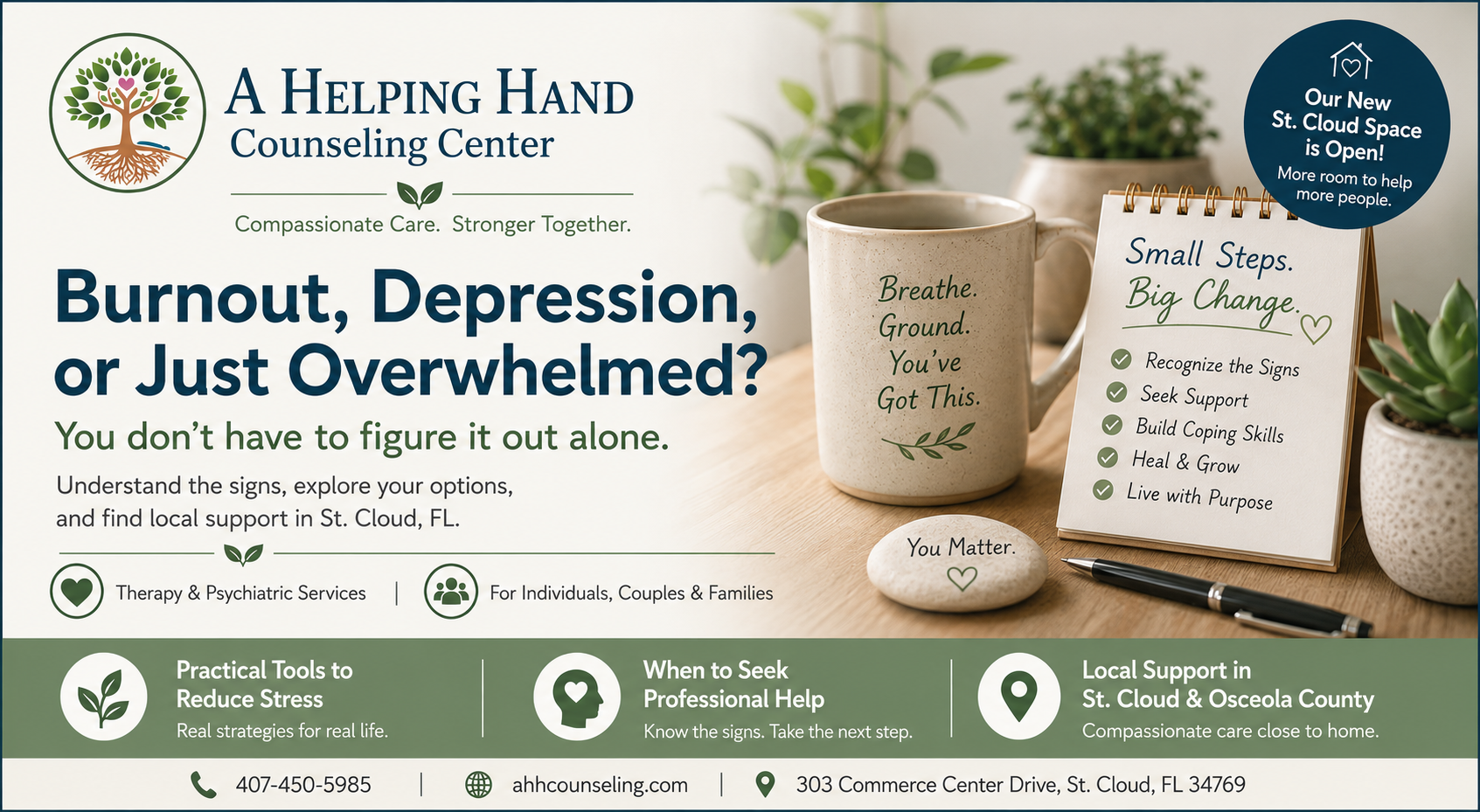
Our New St. Cloud Space Is Open
To help more patients and families receive mental health support close to home, A Helping Hand Counseling Center has opened its new space in St. Cloud.
The expanded environment gives our team more room to provide compassionate, coordinated care while welcoming more members of the growing St. Cloud and Osceola County community.
Our goal is to create a place where patients feel comfortable, respected, and heard from the moment they arrive.
You Do Not Have to Wait Until You Fall Apart
Burnout may be part of what you are experiencing. Anxiety or depression could also be contributing to the way you feel. In some cases, there may not be one clear label.
However, you do not need to identify the exact cause before asking for help. Speaking with a mental health professional can provide clarity, support, and practical next steps.
Most importantly, counseling is not only for people in crisis. Reaching out earlier may help you understand your symptoms, strengthen coping skills, and prevent emotional stress from becoming more disruptive.
A Helping Hand Counseling Center provides therapy and psychiatric services for individuals and families in St. Cloud, Kissimmee, Narcoossee, and throughout Osceola County.
Our new St. Cloud space is now open, giving our team more room to support patients and families close to home.
A Helping Hand Counseling Center provides mental health counseling and psychiatric services at:
303 Commerce Center Drive
St. Cloud, FL 34769
Call 407-450-5985 or visit ahhcounseling.com to request an appointment.
Frequently Asked Questions
How do I know if I am burned out or depressed?
Burnout is often connected to prolonged stress and may improve when the source of that stress changes. Depression may affect your mood, motivation, energy, sleep, self-worth, and enjoyment across several areas of life. Because symptoms can overlap, a mental health professional can help you better understand what you are experiencing.
Can burnout turn into depression?
Prolonged stress and burnout may contribute to worsening emotional health. Someone experiencing burnout may also develop symptoms associated with anxiety or depression. Seeking support early may help prevent symptoms from becoming more disruptive.
Is feeling overwhelmed a reason to start therapy?
Yes. You do not need a diagnosis or a crisis to benefit from counseling. Therapy can help when stress, emotions, relationships, or responsibilities are becoming difficult to manage.
Where can I find mental health counseling in St. Cloud, Florida?
A Helping Hand Counseling Center provides therapy and psychiatric services at 303 Commerce Center Drive in St. Cloud, Florida. The center serves St. Cloud, Kissimmee, Narcoossee, Osceola County, and nearby Central Florida communities.
Does A Helping Hand Counseling Center accept Medicaid?
A Helping Hand Counseling Center accepts Medicaid and offers nonprofit-supported options intended to improve access to mental health services. Contact the office to confirm current coverage, eligibility, and provider availability.
What should I do during a mental health crisis?
If you or someone else is in immediate danger, call 911 or go to the nearest emergency room. For immediate emotional or crisis support in the United States, call or text 988 to connect with the 988 Suicide & Crisis Lifeline.
A Helping Hand Counseling Center
- 303 Commerce Center Drive St. Cloud, FL 34769
- teamcare@ahhcounseling.com
- (407) 450-5985
- www.ahhcounseling.com
Subscribe to Our Newsletter
Posts Category
Most Popular Posts

Why Can’t I Relax? 9 Everyday Habits That Keep You Feeling “Always On”
You finally sit down after a long day. The house is quieter. Nobody needs an immediate answer. You have a little time to yourself. But
Doomscrolling vs. Bloomscrolling: Is Your Phone Making Your Anxiety Worse?
You pick up your phone to check one notification. A few minutes later, you’re reading about economic uncertainty, stressful headlines, social media arguments, and everything

How Do I Know If I Need Therapy? 10 Signs It May Be Time to Talk to a Therapist
If you’re wondering whether you need therapy, you do not have to wait until life feels unmanageable to reach out for support. Therapy may be
Subscribe to Our Newsletter