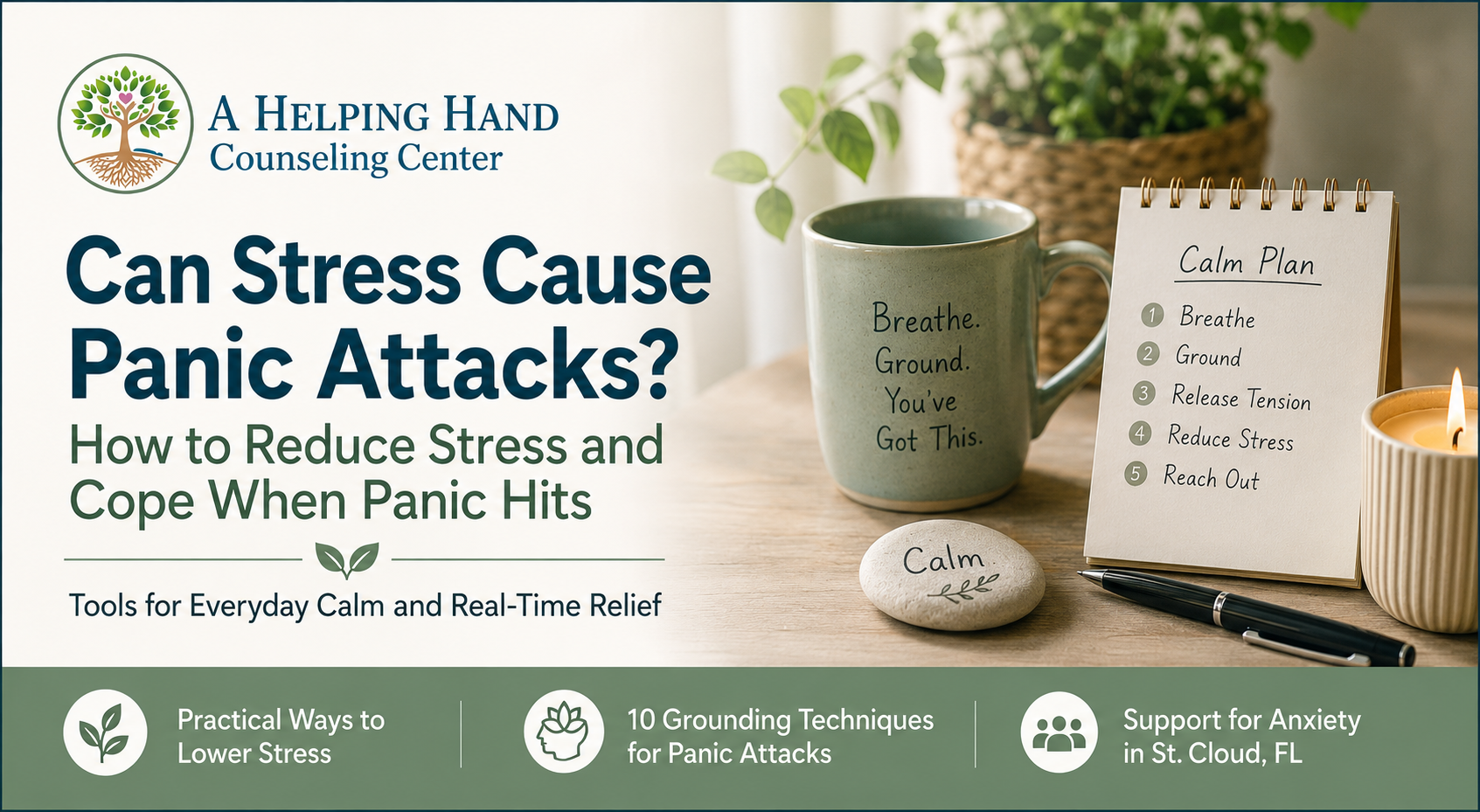
Can Stress Cause Panic Attacks? How to Reduce Stress and Cope When Panic Hits
Stress and panic attacks are not the same thing, but they can be closely connected.
Stress usually develops in response to ongoing demands, uncertainty, conflict, major changes, or feeling overwhelmed. A panic attack is a sudden surge of intense fear or discomfort that may include a racing heart, trembling, dizziness, chest tightness, nausea, shortness of breath, or a fear of losing control.
So, can stress cause panic attacks?
High stress can make some people more vulnerable to anxiety and panic symptoms, but panic attacks can also occur without a clear trigger. When your mind and body remain under pressure for long periods, physical sensations such as muscle tension, rapid breathing, fatigue, and a fast heartbeat may become easier to misinterpret as signs of danger.
Learning how to reduce everyday stress and how to respond when panic begins can help you feel more prepared and less controlled by anxiety.
Key Takeaways
- High or prolonged stress may contribute to panic attacks in some people.
- A panic attack is a sudden episode of intense fear accompanied by physical or emotional symptoms.
- Slow breathing, grounding, sensory tools, and muscle relaxation may help during a panic attack.
- Sleep, regular meals, boundaries, emotional awareness, and self-compassion can support long-term stress management.
- Practicing coping skills before a crisis can make them easier to use when anxiety rises.
- Recurring panic attacks or fear of another attack may be signs that professional support could help.
- New or severe chest pain, fainting, significant breathing difficulty, or unfamiliar symptoms should receive medical attention.
How Are Stress and Panic Attacks Connected?
Stress activates the body’s natural alarm system. This response can increase heart rate, breathing rate, muscle tension, and alertness so you are prepared to respond to a perceived threat.
In short bursts, this reaction can be useful. Problems may develop when the nervous system remains activated for long periods or begins reacting strongly when there is no immediate danger.
A person under chronic stress may already feel:
- Physically tense
- Mentally overwhelmed
- Emotionally exhausted
- Sensitive to bodily sensations
- Unable to slow down
- Worried that something will go wrong
- Afraid of losing control
These feelings do not automatically lead to a panic attack. However, they can create conditions in which a sudden physical sensation or anxious thought feels more alarming.
For example, someone who is exhausted and under pressure may notice their heart beating quickly. They may think, “Something is wrong with me.” That thought can increase fear, which may intensify the heartbeat and other symptoms. This cycle can sometimes escalate into panic.
Panic attacks may also happen unexpectedly and without an obvious stressor. The National Institute of Mental Health describes panic attacks as sudden periods of intense fear that can include a racing heart, difficulty breathing, dizziness, trembling, nausea, and feelings of losing control.
What Does a Panic Attack Feel Like?
Panic attacks can feel different from person to person. Common symptoms include:
- A pounding or racing heart
- Shortness of breath
- Chest pressure or discomfort
- Sweating, chills, or hot flashes
- Shaking or trembling
- Dizziness or lightheadedness
- Nausea or stomach discomfort
- Tingling or numbness
- Feeling detached from yourself or your surroundings
- Fear of fainting
- Fear of losing control
- A sense that something terrible is about to happen
These symptoms can be frightening because they often appear quickly and feel physically intense.
Do not assume that every episode of chest pain, breathing difficulty, or dizziness is anxiety. Seek immediate medical care for new, severe, unusual, or worsening symptoms, especially if you are unsure what is causing them.
What Should You Do During a Panic Attack?
When panic begins, the goal is not to force every symptom to stop immediately. Trying to fight the sensations can sometimes add another layer of fear.
Instead, focus on helping your body slow down and reconnect with the present moment.
1. Focus on Slow, Gentle Breathing
Panic can cause rapid or shallow breathing. This may increase lightheadedness, tingling, chest discomfort, and the feeling that you cannot get enough air.
Try the following:
- Place both feet on the floor.
- Breathe in gently through your nose.
- Breathe out slowly through your mouth.
- Allow your exhale to be slightly longer than your inhale.
- Continue for one or two minutes.
Avoid forcing very large breaths. Comfortable, controlled breathing is usually more helpful than repeatedly gasping for air.
Slow breathing exercises are commonly recommended for stress, anxiety, and panic. Practicing them regularly may also make the technique easier to use during a stressful moment.
2. Remind Yourself That the Feeling Is Temporary
Panic can produce thoughts such as:
- “I cannot handle this.”
- “I am losing control.”
- “Something terrible is happening.”
- “This feeling will never stop.”
Respond with a short, realistic statement:
“This is a panic response. It feels intense, but it will pass.”
You could also repeat:
- “My body is reacting to fear.”
- “I can take this one breath at a time.”
- “I do not have to solve everything right now.”
- “I can allow this feeling to rise and fall.”
The goal is not to pretend that you feel calm. It is to remind yourself that the sensations are temporary and that you have a plan.
3. Focus on One Object
Choose one object near you and describe it in detail.
Notice:
- Its color
- Its shape
- Its size
- Its texture
- Its temperature
- Any words or patterns on it
- How it feels in your hand
You might focus on a pen, chair, water bottle, piece of clothing, plant, or picture frame.
This grounding technique directs attention away from frightening predictions and toward something concrete in your environment.
4. Use the 5-4-3-2-1 Grounding Technique
Grounding exercises help redirect your attention to what is happening around you.
Identify:
- Five things you can see
- Four things you can feel
- Three things you can hear
- Two things you can smell
- One thing you can taste
Move through the exercise slowly. You do not need to find the perfect answer for each category.
Grounding techniques are designed to help you reconnect with the present moment rather than becoming absorbed in anxious thoughts or sensations.
5. Use a Safe, Noticeable Taste or Smell
A familiar flavor or scent may give your mind another point of focus.
Options may include:
- A mint
- Flavored gum
- Sour candy
- Cold water
- A familiar lotion
- A calming scent you already know you tolerate
Avoid overpowering smells or anything that could trigger allergies, nausea, breathing problems, or sensory discomfort.
As you use the item, describe the sensation. Is it sweet, sour, cool, sharp, smooth, or familiar?
6. Hold or Drink Something Cold
Cold sensations can provide a strong sensory cue.
Try:
- Holding a cold water bottle
- Drinking cool water slowly
- Running cool water over your hands
- Placing a cool washcloth on your face
- Holding a wrapped cold pack
Pay attention to the temperature and texture. Notice how the sensation changes as you hold the object.
Do not place ice directly against your skin for an extended period.
7. Relax One Muscle at a Time
Stress and panic often cause muscles to tighten automatically.
Begin with your hands, shoulders, feet, or jaw:
- Notice where you are holding tension.
- Gently tighten the muscle for a few seconds.
- Release it slowly.
- Notice the difference between tension and relaxation.
- Continue with another muscle group.
Do not tense injured or painful areas. Simply imagine those muscles softening.
Muscle relaxation is one of several strategies used to help manage stress and anxiety responses.
8. Press Your Feet Into the Ground
Feel the floor beneath you.
Notice:
- The pressure under your feet
- The position of your legs
- The support of the chair
- The texture of your shoes or socks
- The temperature of the floor
Then name where you are:
“I am sitting in my room. My feet are on the floor. I can see the window. I am staying with this moment.”
This exercise can be especially helpful when panic makes you feel disconnected or unsteady.
9. Reduce Unnecessary Stimulation
Noise, bright lights, crowded spaces, heat, and multiple conversations may make it harder to regain focus.
When it is safe and practical, try to:
- Sit somewhere quieter
- Lower the volume around you
- Loosen restrictive clothing
- Move away from flashing screens
- Focus on one person’s voice
- Ask someone to give you space
- Ask a trusted person to stay nearby
Temporarily reducing stimulation can give you room to practice your coping skills.
10. Tell Someone What You Need
A trusted person may be able to help you stay connected to the present.
Use specific language:
- “I think I am having a panic attack. Please stay with me.”
- “Can you remind me to slow my breathing?”
- “Please speak quietly.”
- “Help me focus on what is around us.”
- “I do not need advice right now. I just need company.”
It can help to create a panic attack support plan before you need it. Write down which techniques help, who you can contact, and what you would like that person to do.
How Can You Reduce Stress Before It Builds Into Panic?
Panic attack coping skills are useful during an intense moment. Daily stress-management habits address the broader physical and emotional pressure that may contribute to anxiety.
You do not need to change your entire life at once. Start with one or two realistic habits and practice them consistently.
Prioritize Enough Sleep
Poor sleep can make it harder to regulate emotions, concentrate, solve problems, and manage physical stress.
Support a more consistent sleep routine by:
- Going to bed and waking up at similar times
- Reducing late-night screen use
- Creating a calming wind-down routine
- Limiting caffeine later in the day
- Keeping your room cool and comfortable
- Talking with a healthcare provider about ongoing sleep problems
The goal is not to achieve perfect sleep every night. It is to create a routine that gives your body more opportunities to recover.
Eat Regular, Nourishing Meals
Hunger, dehydration, and blood sugar changes may create sensations such as shaking, weakness, irritability, dizziness, or a fast heartbeat.
These sensations can feel especially uncomfortable when you are already anxious.
Try to:
- Eat at reasonably consistent times
- Keep simple snacks available
- Drink water throughout the day
- Include foods that provide lasting energy
- Notice whether caffeine increases anxiety symptoms
Regular meals will not eliminate panic attacks, but meeting your physical needs can reduce avoidable strain on your body.
Set Clear Boundaries
Chronic overcommitment can keep your stress response activated.
A boundary may involve:
- Declining an additional responsibility
- Protecting time for rest
- Limiting after-hours work communication
- Reducing exposure to draining conversations
- Asking for help
- Communicating what you can realistically manage
Boundaries are not selfish. They help protect your time, energy, and ability to function.
Name Your Feelings
Instead of saying, “I feel bad,” try to identify the specific emotion.
You might feel:
- Overwhelmed
- Worried
- Frustrated
- Disappointed
- Lonely
- Exhausted
- Overstimulated
- Uncertain
- Pressured
Naming the feeling can make it easier to identify what you need next.
For example, exhaustion may call for rest. Confusion may call for more information. Overwhelm may mean a task needs to be divided into smaller steps.
Listen to Early Stress Signals
Your body may show signs of stress before you consciously recognize how overwhelmed you feel.
Common warning signs include:
- Jaw clenching
- Shoulder tension
- Headaches
- Stomach discomfort
- Irritability
- Difficulty concentrating
- Restlessness
- Sleep changes
- Feeling rushed
- Avoiding responsibilities
- Becoming unusually emotional
Treat these signs as information rather than personal failures.
Ask yourself:
“What is my body telling me that I need right now?”
The answer might be food, water, movement, rest, quiet, support, or a clearer boundary.
Practice Self-Forgiveness
Self-criticism often adds more stress to an already difficult situation.
You may tell yourself:
- “I should be able to handle this.”
- “I am overreacting.”
- “Why can everyone else cope except me?”
- “I failed because I had another panic attack.”
Try replacing those thoughts with:
“I am having a strong stress response, and I am learning how to manage it.”
Coping does not mean never feeling anxious. It means developing a healthier response when anxiety appears.
Create Slower Mornings
A rushed morning can set a tense pace for the rest of the day.
A slower routine may include:
- Preparing clothes or meals the night before
- Avoiding social media immediately after waking
- Drinking water before checking messages
- Taking several slow breaths
- Sitting quietly for five minutes
- Leaving extra travel time
- Choosing one priority for the morning
Even a small amount of breathing room can reduce the feeling that you are already behind.
Practice Coping Skills When You Feel Calm
Do not wait until panic reaches its highest level to try a grounding exercise for the first time.
Practice during lower-stress moments:
- Take five slow breaths before starting work.
- Complete a sensory grounding exercise while sitting at home.
- Relax your shoulders while waiting in line.
- Notice your feet on the floor during a conversation.
- Repeat a calming statement before bed.
Regular practice can make these strategies feel more familiar and accessible when anxiety rises.
When Should You Seek Help for Stress or Panic Attacks?
Consider speaking with a mental health professional when:
- Panic attacks happen repeatedly
- You worry constantly about another attack
- You avoid driving, work, school, stores, crowds, or social situations
- Stress is affecting your sleep, health, or relationships
- Anxiety interferes with daily responsibilities
- You feel unable to relax, even when nothing urgent is happening
- Coping tools are no longer enough
- You use alcohol or other substances to manage anxiety
- You are unsure whether your symptoms are related to anxiety or another concern
Panic disorder is commonly treated with psychotherapy, medication, or a combination of the two, depending on the individual’s needs and medical situation.
A Helping Hand Counseling Center provides individual, couples, family, and group therapy services in St. Cloud, Florida. Its services are designed to support people experiencing concerns such as anxiety, emotional stress, trauma, and relationship challenges.
Relevant internal links to include:
- Explore therapy services in St. Cloud, FL
- Learn about Accelerated Resolution Therapy for anxiety and trauma
- Read about EMDR therapy
- Meet the counseling team
- Review first appointment steps
- Contact A Helping Hand Counseling Center
Frequently Asked Questions
Can stress cause panic attacks?
High or prolonged stress may make some people more vulnerable to panic symptoms, especially when the body is already tense, exhausted, or highly alert. However, panic attacks can also happen unexpectedly without a clear stressor.
What is the difference between stress, anxiety, and a panic attack?
Stress is often a response to an identifiable demand or challenge. Anxiety may involve persistent worry, tension, or fear that continues even when there is no immediate threat. A panic attack is a sudden surge of intense fear or discomfort accompanied by strong physical or emotional symptoms.
What is the fastest way to calm a panic attack?
There is no single method that works immediately for everyone. Begin with slow breathing, a grounding exercise, and a realistic reminder that the feeling will pass. Focus on reducing the intensity rather than forcing yourself to become calm instantly.
What is the 5-4-3-2-1 grounding technique?
The 5-4-3-2-1 method asks you to identify five things you see, four you feel, three you hear, two you smell, and one you taste. It helps redirect attention toward your surroundings.
Can cold water help during a panic attack?
Holding a cold bottle, drinking cool water, or placing a cool cloth on your face may provide a noticeable sensory cue. This can help redirect your attention away from anxious thoughts. Avoid placing ice directly against your skin for long periods.
How can I prevent stress from becoming overwhelming?
Start by protecting the basics: sleep, regular meals, hydration, boundaries, movement, emotional awareness, and time to recover. Pay attention to early warning signs instead of waiting until stress becomes unmanageable.
Can therapy help with panic attacks?
Therapy can help you understand panic symptoms, identify triggers, change fear-based thought patterns, reduce avoidance, and practice coping strategies. Treatment may also address underlying stress, trauma, or anxiety.
When should I seek emergency help?
Seek immediate medical attention for new or severe chest pain, fainting, major breathing difficulty, sudden neurological symptoms, symptoms following substance use, or any episode that feels different from your usual anxiety symptoms.
Support for Stress, Anxiety, and Panic Attacks in St. Cloud, FL
You do not have to wait until stress or panic begins controlling your routines, relationships, or decisions before seeking support.
A Helping Hand Counseling Center offers mental health counseling in St. Cloud, Florida, including individual, couples, family, and group therapy. The center also provides specialized services for people working through anxiety, trauma, and other emotional challenges.
Contact A Helping Hand Counseling Center to learn more or request an appointment.
This article is intended for general educational purposes and is not a substitute for medical care, diagnosis, psychotherapy, or emergency services.
A Helping Hand Counseling Center
- 303 Commerce Center Drive St. Cloud, FL 34769
- teamcare@ahhcounseling.com
- (407) 450-5985
- www.ahhcounseling.com
Subscribe to Our Newsletter
Posts Category
Most Popular Posts
Doomscrolling vs. Bloomscrolling: Is Your Phone Making Your Anxiety Worse?
You pick up your phone to check one notification. A few minutes later, you’re reading about economic uncertainty, stressful headlines, social media arguments, and everything
How Do I Know If I Need Therapy? 10 Signs It May Be Time to Talk to a Therapist
If you’re wondering whether you need therapy, you do not have to wait until life feels unmanageable to reach out for support. Therapy may be
Is Overthinking a Sign of Anxiety? 9 Signs Your Mind May Be Stuck in an Anxiety Loop
You replay a conversation from three days ago. You write a text, delete it, rewrite it, and wonder how the other person will interpret it.
Subscribe to Our Newsletter