Key Takeaways
- Depression can make daily functioning feel overwhelming, but small coping strategies can help.
- Self-compassion is important during difficult emotional periods.
- Journaling, movement, sleep, sunlight, and reducing social media exposure may support emotional wellness.
- Mental health support can provide personalized coping tools and long-term healing strategies.
- Seeking help is a sign of strength, not weakness.
Some days with depression feel heavier than others. Even simple tasks can feel overwhelming, and finding motivation may seem impossible. While coping strategies are not a substitute for professional mental health care, small intentional actions can help support emotional wellness during difficult moments.
At A Helping Hand Counseling Center, we encourage individuals to focus on manageable, realistic steps instead of pressuring themselves to “snap out of it.” Recovery and emotional regulation often begin with compassionate self-care and support.
Why Small Actions Matter During Depression
Depression can affect energy levels, concentration, sleep, appetite, and emotional resilience. On difficult days, even basic self-care can feel exhausting. Research consistently shows that small behavioral changes can positively impact mood regulation and mental health over time.
The goal is not perfection. The goal is progress.
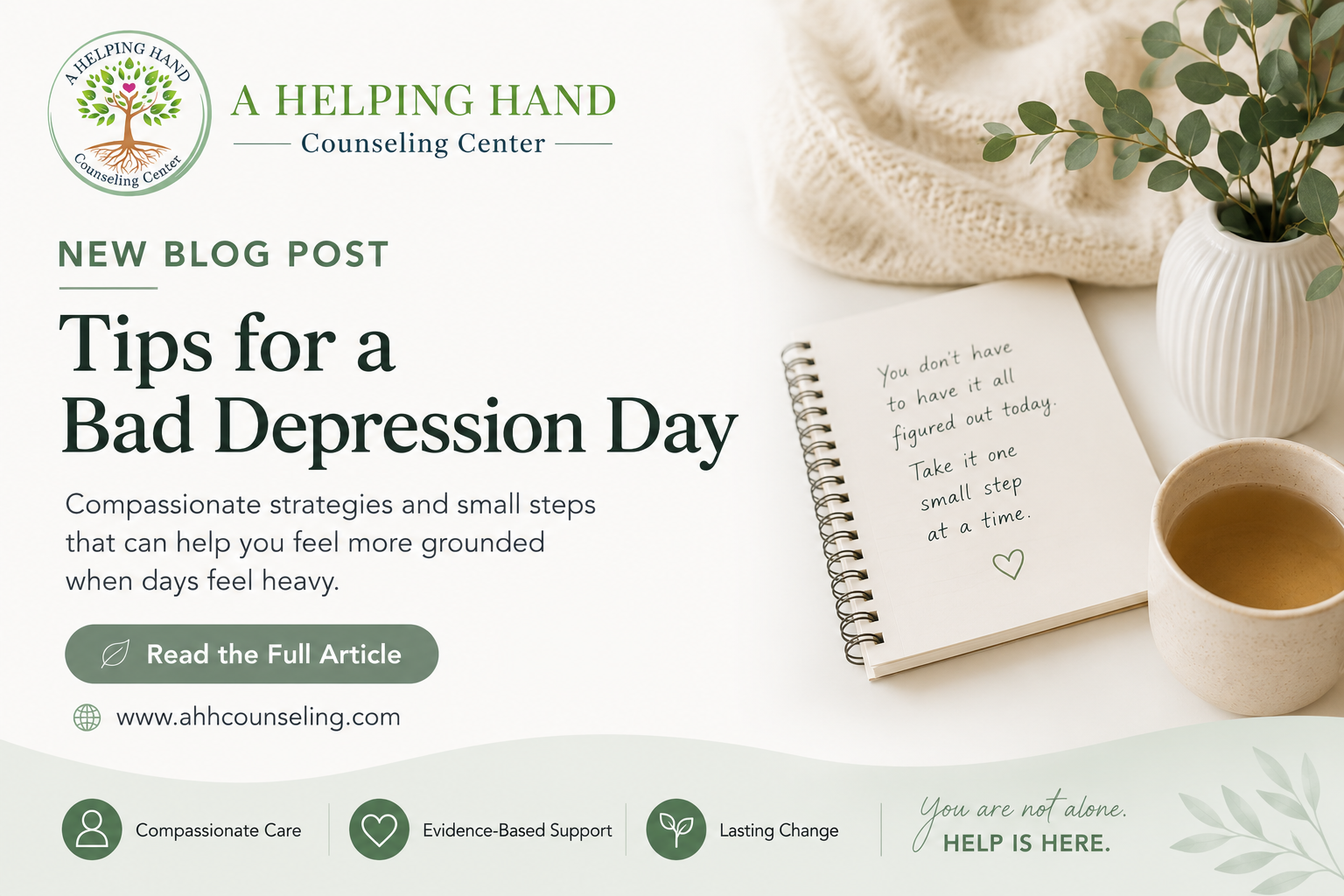
6 Helpful Tips for Managing a Bad Depression Day
1. Practice Positive Self-Talk
Negative thoughts often become amplified during depressive episodes. Try replacing harsh self-criticism with compassionate reminders:
- “This feeling will pass.”
- “I am doing the best I can today.”
- “I don’t have to solve everything at once.”
Positive self-talk can help interrupt cycles of hopelessness and encourage emotional balance.
Related Resource: Explore strategies for managing negative thinking patterns through professional counseling support.
2. Journal Your Thoughts and Feelings
Writing down emotions can help reduce mental overwhelm and improve emotional awareness. Journaling creates space to process thoughts without judgment.
You can try:
- Writing freely for 5–10 minutes
- Listing emotions you’re experiencing
- Tracking triggers or mood patterns
- Writing down one thing you’re grateful for
Journaling can also help identify recurring emotional challenges that may benefit from therapy.
3. Prioritize Quality Sleep
Sleep and mental health are deeply connected. Depression can disrupt sleep patterns, making symptoms feel more intense.
Helpful sleep habits include:
- Maintaining a consistent bedtime
- Limiting screen time before sleep
- Avoiding caffeine late in the day
- Creating a calming nighttime routine
If sleep struggles continue, professional mental health support may help address underlying causes.
4. Spend Time Outside
Sunlight and fresh air can positively affect mood and energy levels. Even a short walk outdoors may help reduce feelings of isolation and mental fatigue.
You do not need an intense activity. Simply sitting outside, stretching, or taking a brief walk can be beneficial.
5. Engage in Physical Activity
Exercise supports both physical and emotional wellness. Movement releases endorphins and can help reduce stress, anxiety, and depressive symptoms.
Try:
- Stretching
- Yoga
- Walking
- Dancing
- Light workouts
- Any activity that feels manageable
Consistency matters more than intensity.
6. Take a Break from Social Media
Social media can sometimes increase feelings of comparison, overstimulation, or emotional exhaustion. Taking intentional breaks from scrolling may help create mental space and reduce stress.
Consider:
- Muting triggering content
- Setting screen time limits
- Taking a short digital detox
- Replacing scrolling with calming activities
Frequently Asked Questions
What should I do if my depression feels overwhelming?
If depression symptoms begin interfering with daily life, relationships, work, or safety, it may be time to seek professional mental health support. A licensed therapist can help you develop coping strategies tailored to your needs.
Can exercise really help with depression?
Research shows physical activity can support mood regulation by releasing endorphins and reducing stress hormones. Even light movement can have positive mental health benefits.
How can journaling help mental health?
Journaling may improve emotional awareness, reduce stress, and help individuals process difficult emotions in a safe and private way.
Is it okay to take breaks from social media?
Yes. Limiting social media exposure may help reduce emotional overstimulation, unhealthy comparisons, and stress during difficult mental health days.
When should someone seek therapy for depression?
Therapy may be beneficial when symptoms persist, worsen, or impact daily functioning. Early support can help individuals build healthier coping mechanisms and emotional resilience.
How Therapy Can Help
Professional counseling can provide:
At A Helping Hand Counseling Center, we believe every person deserves compassionate support and a safe space to heal.