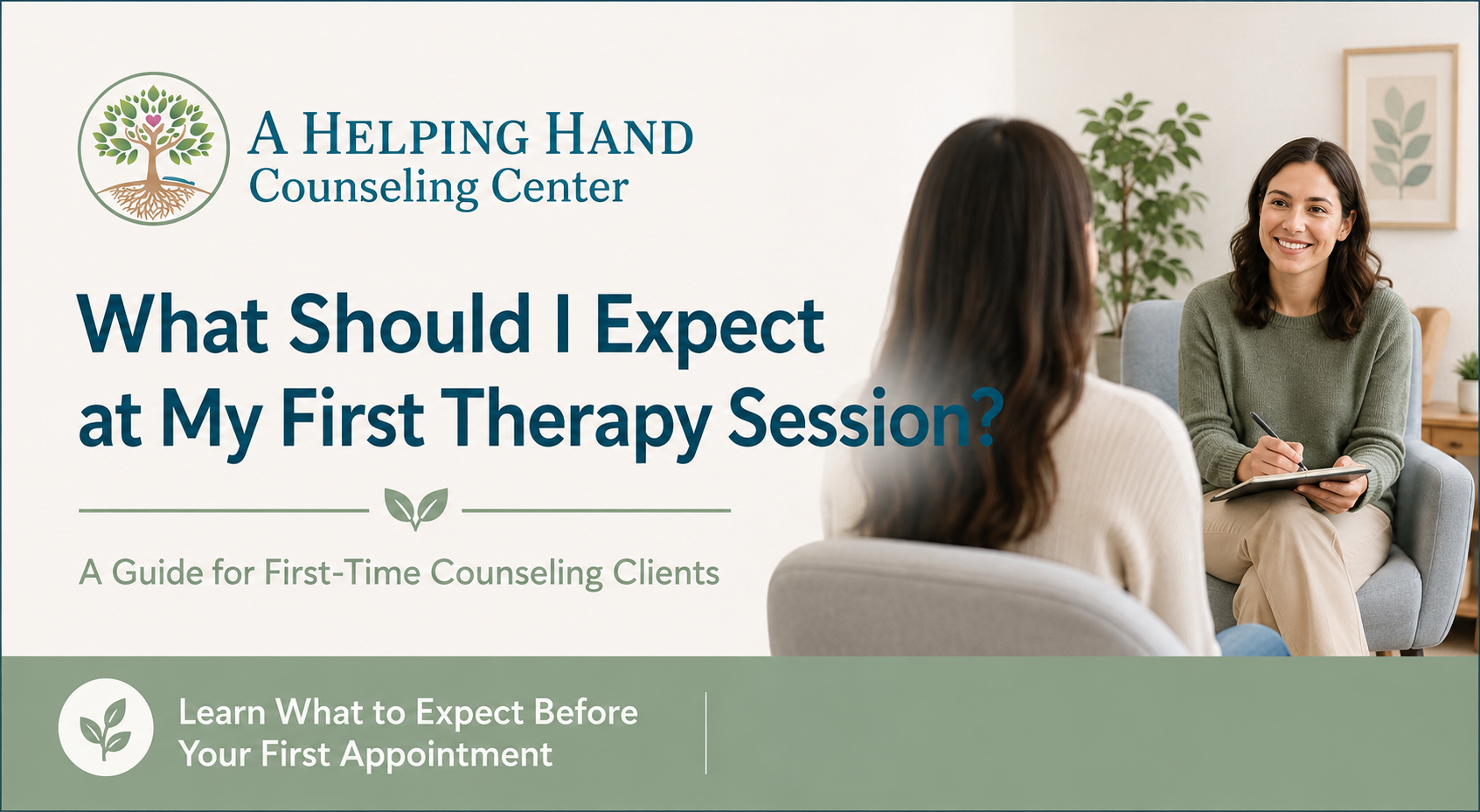
What Should I Expect at My First Therapy Session?
Key Takeaways
- Feeling nervous before your first therapy session is normal.
- The first appointment focuses on understanding your concerns and goals.
- You are not expected to share everything immediately.
- Therapists provide a confidential, non-judgmental environment.
- Building trust takes time and is part of the therapeutic process.
- Therapy can help you develop healthier coping skills, improve relationships, and support emotional well-being.
Starting therapy can feel both exciting and intimidating. Many people wonder what will happen during their first appointment, what they should say, and whether therapy is right for them. If you’re considering counseling for the first time, you’re not alone. Feeling nervous before your first session is completely normal.
At A Helping Hand Counseling Center, we believe that understanding the process can help ease anxiety and make your first experience more comfortable.
Why People Feel Nervous About Their First Therapy Appointment
Seeking help is a significant step. Many first-time clients worry about:
- Being judged
- Not knowing what to talk about
- Feeling emotional during the session
- Sharing personal information
- Wondering if therapy will actually help
The reality is that therapists are trained to create a supportive, non-judgmental environment where you can speak openly at your own pace.
What Happens During a First Therapy Session?
Your first counseling session is often called an intake or assessment session. This appointment focuses on getting to know you and understanding what brings you to therapy.
Your therapist may ask questions about:
- Current concerns or challenges
- Mental health history
- Family relationships
- Work or school experiences
- Stressors affecting your daily life
- Physical health and wellness
- Previous counseling experiences
There is no pressure to share everything at once. The goal is simply to begin building a therapeutic relationship and gain a better understanding of your needs.
Will I Have to Talk About Everything Right Away?
No.
One common misconception is that you must immediately discuss your deepest fears or most painful experiences. Therapy is a process, and trust develops over time.
Your therapist will follow your comfort level and help guide the conversation. You can share as much or as little as you’re ready to discuss during the first session.
What Questions Might My Therapist Ask?
Every therapist has their own approach, but common questions include:
- What brought you to therapy now?
- What goals would you like to achieve?
- How have you been feeling recently?
- Have you experienced anxiety, depression, or stress?
- What support systems do you currently have?
- What would you like your life to look like in the future?
These questions help create a roadmap for your treatment plan.
Do I Need to Prepare for My First Therapy Session?
You do not need to prepare extensively, but it may help to think about:
- What prompted you to seek counseling
- Current challenges or symptoms
- Personal goals for therapy
- Questions you have about the counseling process
Many clients find it helpful to write down a few notes beforehand.
What If I Feel Emotional?
It’s completely normal to experience strong emotions during therapy. Some people feel relief after finally talking about difficult experiences. Others may cry, feel nervous, or become emotional when discussing personal concerns.
Therapists expect this and are trained to help you navigate those feelings safely and constructively.
How Long Does It Take to Feel Comfortable in Therapy?
Comfort levels vary from person to person. Some clients feel connected to their therapist right away, while others need several sessions to build trust.
Therapy is a collaborative process. A strong therapeutic relationship is one of the most important factors in successful counseling outcomes.
Signs Your First Therapy Session Went Well
After your first appointment, you may notice:
- Feeling heard and understood
- Increased hope about your situation
- A better understanding of your challenges
- Clear goals for future sessions
- Comfort with your therapist’s communication style
Remember, the first session is primarily about getting started. You don’t need to solve everything in one appointment.
Frequently Asked Questions
How long is a first therapy session?
Most initial counseling appointments last between 45 and 60 minutes, though some intake sessions may be longer.
What should I bring to my first therapy appointment?
Bring any required paperwork, insurance information if applicable, and a list of questions or concerns you’d like to discuss.
Is everything I say confidential?
In most situations, yes. Your therapist will explain confidentiality policies and any legal exceptions during your first session.
What if I don’t know what to talk about?
That’s okay. Therapists are trained to guide conversations and help you identify important topics.
How many therapy sessions will I need?
The number of sessions varies depending on your goals, concerns, and individual circumstances. Some people benefit from short-term counseling, while others prefer ongoing support.
Take the First Step Toward Better Mental Health
Beginning therapy is an investment in your emotional well-being. Whether you’re dealing with anxiety, depression, relationship concerns, life transitions, or everyday stress, counseling can provide support, guidance, and practical tools for growth.
If you’re considering therapy, A Helping Hand Counseling Center is here to help you start your journey toward healing and personal growth.