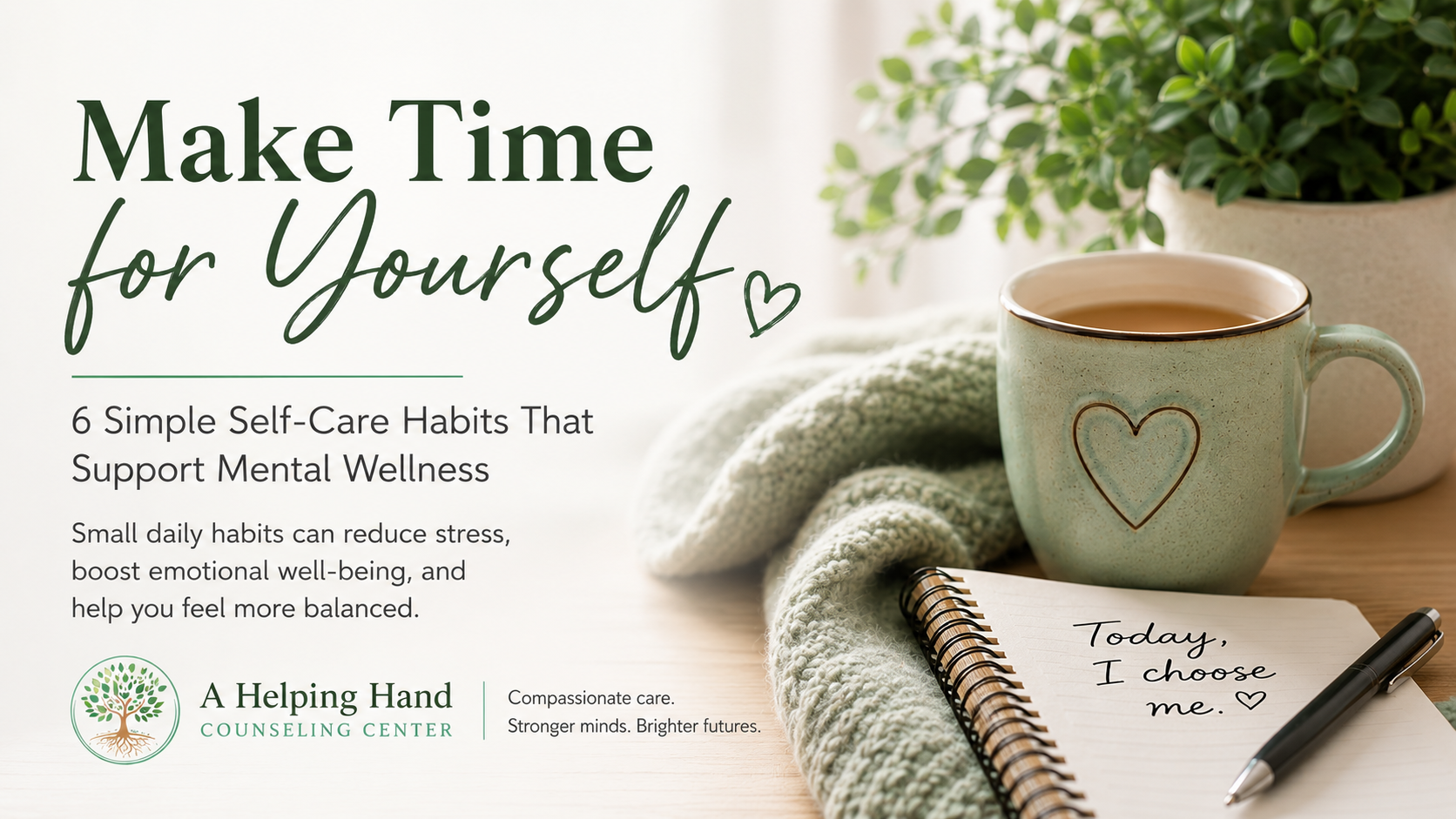
Make Time for Yourself: 6 Self-Care Habits That Support Mental Wellness
Key Takeaways
- Self-care is an important part of maintaining good mental health and emotional balance.
- Small daily habits can help reduce stress and improve overall well-being.
- Setting realistic goals can prevent burnout and reduce unnecessary pressure.
- Staying organized may improve focus, structure, and stress management.
- Avoiding procrastination can help reduce anxiety and feelings of overwhelm.
- Regular exercise supports both physical and emotional wellness.
- Celebrating personal successes encourages confidence and positive growth.
- Staying connected with others can strengthen emotional support systems.
- Professional counseling can help individuals develop healthy coping strategies and improve mental wellness.
In today’s fast-paced world, it’s easy to place your own needs at the bottom of the priority list. Between work responsibilities, family obligations, social commitments, and everyday stressors, many people forget that taking care of themselves is essential—not optional.
Self-care is more than a trend or luxury. It’s an important part of maintaining emotional balance, reducing stress, and supporting long-term mental wellness. Even small daily habits can make a meaningful difference in how we feel mentally and emotionally.
Here are six simple ways to make time for yourself and strengthen your mental health.
1. Set Realistic Goals
One of the biggest sources of stress is expecting too much from ourselves. Unrealistic goals can create frustration, burnout, and feelings of failure.
Instead, focus on setting manageable goals that fit your current lifestyle and energy level. Breaking larger tasks into smaller steps can help you feel more accomplished and motivated throughout the day.
When goals are realistic, they become sustainable—and sustainability is key to emotional wellness.
2. Stay Organized
Mental clutter often grows when our schedules, responsibilities, or environments feel chaotic. Staying organized can help reduce anxiety and improve focus.
Simple habits like writing daily to-do lists, using a calendar, or creating structured routines can help bring a sense of control and calm to your day.
Organization doesn’t need to be perfect. Small improvements in structure can have a positive impact on mental clarity and stress management.
3. Avoid Procrastination
Putting things off can temporarily relieve stress, but it often increases anxiety over time. Tasks that are delayed tend to feel larger and more overwhelming later.
Try starting with one small action rather than focusing on completing everything at once. Progress—even small progress—can help build momentum and reduce emotional pressure.
Practicing self-compassion is also important. Productivity does not define your worth.
4. Exercise Regularly
Physical activity supports both physical and mental health. Regular movement can help improve mood, reduce stress hormones, increase energy, and support better sleep.
Exercise does not have to mean intense workouts or long gym sessions. Walking, stretching, yoga, dancing, or short daily workouts can all contribute to emotional wellness.
Finding activities you genuinely enjoy makes consistency easier and more sustainable.
5. Celebrate Your Successes
Many people focus heavily on what still needs improvement while overlooking their accomplishments. Taking time to acknowledge progress—big or small—can help improve confidence and motivation.
Celebrating successes may include:
- Completing a difficult task
- Maintaining healthy routines
- Reaching a personal milestone
- Asking for help when needed
- Taking time to rest and recharge
Recognizing growth helps reinforce positive self-care behaviors.
6. Stay Connected With Others
Healthy relationships and social support play an important role in mental wellness. Even virtual connections can help reduce feelings of isolation and improve emotional resilience.
Checking in with friends, joining supportive communities, or spending quality time with loved ones can strengthen emotional support systems during stressful periods.
Connection reminds us that we do not have to navigate challenges alone.
Prioritizing Yourself Is Part of Mental Wellness
Making time for yourself will not always happen automatically. It often requires intentional choices, healthy boundaries, and consistent self-care habits.
The good news is that self-care does not need to be complicated. Small daily actions can create meaningful improvements in emotional well-being over time.
If stress, anxiety, or emotional challenges begin affecting your daily life, professional support can help. Therapy provides a safe space to explore challenges, develop healthy coping strategies, and strengthen overall mental wellness.
At A Helping Hand Counseling Center, we are committed to supporting individuals and families through compassionate, personalized mental health care.
Frequently Asked Questions (FAQ)
Why is self-care important for mental health?
Self-care helps support emotional wellness by reducing stress, improving mood, increasing resilience, and encouraging healthy coping habits. Consistent self-care practices can contribute to better overall mental health.
What are simple ways to practice self-care daily?
Simple self-care habits include setting realistic goals, staying organized, exercising regularly, getting enough rest, maintaining healthy boundaries, and taking time to connect with supportive people.
Can self-care help reduce stress and anxiety?
Yes. Healthy self-care routines can help manage stress and anxiety by improving emotional regulation, reducing overwhelm, and supporting overall mental wellness.
How does exercise benefit mental wellness?
Regular physical activity may help reduce stress hormones, improve mood, increase energy levels, and support better sleep. Even light movement such as walking or stretching can positively affect emotional well-being.
What should I do if I feel overwhelmed all the time?
Feeling constantly overwhelmed may be a sign that additional support is needed. Speaking with a mental health professional can help you identify stressors, develop coping strategies, and improve emotional balance.
Is it selfish to make time for yourself?
No. Prioritizing your mental and emotional health is an important part of maintaining healthy relationships, productivity, and overall well-being. Self-care helps you better care for yourself and others.
When should I consider counseling or therapy?
You may benefit from counseling if stress, anxiety, sadness, burnout, or emotional challenges begin affecting your daily life, relationships, work, or overall functioning. Therapy provides support, guidance, and healthy coping tools.
How can therapy support self-care and emotional wellness?
Therapy can help individuals better understand their emotions, manage stress, improve communication, strengthen coping skills, and create healthier routines that support long-term mental wellness.
If you are looking for professional mental health support, A Helping Hand Counseling Center is here to help. Contact our team today to learn more about counseling services and personalized support for your emotional wellness journey.
A Helping Hand Counseling Center
- 303 Commerce Center Drive St. Cloud, FL 34769
- teamcare@ahhcounseling.com
- (407) 450-5985
- www.ahhcounseling.com
Subscribe to Our Newsletter
Posts Category
Most Popular Posts
Doomscrolling vs. Bloomscrolling: Is Your Phone Making Your Anxiety Worse?
You pick up your phone to check one notification. A few minutes later, you’re reading about economic uncertainty, stressful headlines, social media arguments, and everything

How Do I Know If I Need Therapy? 10 Signs It May Be Time to Talk to a Therapist
If you’re wondering whether you need therapy, you do not have to wait until life feels unmanageable to reach out for support. Therapy may be

Is Overthinking a Sign of Anxiety? 9 Signs Your Mind May Be Stuck in an Anxiety Loop
You replay a conversation from three days ago. You write a text, delete it, rewrite it, and wonder how the other person will interpret it.
Subscribe to Our Newsletter